Nasturtiums (Tropaeolum majus) are hardy annual flowers that fill the garden with a sharp scent and vibrant colour. Strong, vigorous and easy to grow from seed, choose compact varieties for window boxes, containers or borders, and climbing varieties to scramble up walls and fences. They positively thrive in poor soil, and make excellent companion plants near your vegetable patch. Here’s a step-by-step guide to successfully growing nasturtiums…
In the meantime, browse our full range of nasturtium seeds for inspiration.
When to sow nasturtium seeds

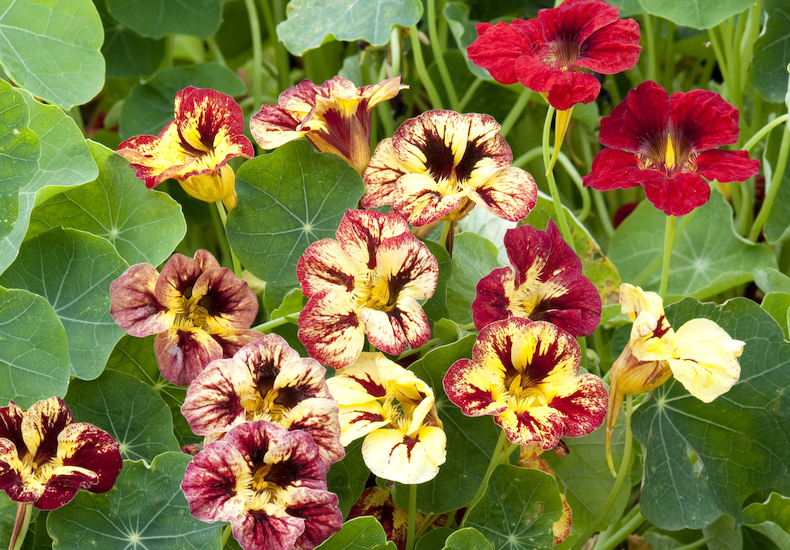
This mix of colourful blooms is a magnet for pollinators
Image: Nasturtium ‘Dayglow Mix’ from Suttons
Because they’re one of the easiest annuals to grow, most gardeners simply direct-sow their nasturtium seeds outside in April or May, once the soil has warmed up. Provided they get full-sun and the soil is free-draining, they will flower from mid-summer until the first frosts.
If you want to get a bit of a head-start, you can sow your nasturtium seeds indoors in March. Put each seed into a 9cm pot, and place them in a greenhouse or on a warm windowsill to germinate. Harden your seedlings off for 7-10 days before transplanting them out into their final positions in May, or after the last frost in your area.
Where to grow nasturtiums

These striking red blooms stand out beautifully against the darker foliage
Image: Nasturtium ‘Coral Reef’ seeds from Suttons
Nasturtiums need free-draining soil and plenty of sunshine to grow well. At least half a day of full sun will give you the best results. Unlike many flowers, they perform best in poor soils. If the soil is too rich and fertile, you’ll get lots of leafy growth, but fewer flowers.
Choose a bright and sunny spot and sow your seeds 1-2 cm deep and 20-30cm apart. You can thin the seedlings later if necessary.
Nasturtiums are versatile blooms and look good in beds, raised planters, containers or cascading out of hanging baskets. Climbing varieties will quickly scramble up a tree or trellis, and they’re a great choice for allotments as their scented foliage attracts pests away from your precious veg.
Quick tips on caring for nasturtiums

Marbled foliage and colourful flowers make this a popular favourite
Image: Nasturtium ‘Orange Troika’ seeds from Suttons
Here are some quick tips to help you care for your nasturtiums:
- Water: While your plants are getting established, water during dry spells but avoid waterlogging. Nasturtiums are drought-tolerant once established.
- Fertilise: Avoid over-fertilising, as this can lead to lush foliage but fewer flowers. A light application of balanced fertiliser is sufficient.
- Support: Provide a trellis or obelisk for climbing varieties.
- Deadhead: Remove spent flowers regularly to encourage more growth,
- Pests: Watch for aphids and caterpillars. Remove by hand or use organic pest control methods.
- Diseases: Nasturtiums are generally disease-resistant but can be affected by powdery mildew in humid conditions. Ensure good air circulation.
- Save the seeds: Nasturtiums are annuals, but you can save seeds from mature pods to sow the following year. Dry and store seeds in a cool, dry place.
Five nasturtium varieties to try at home
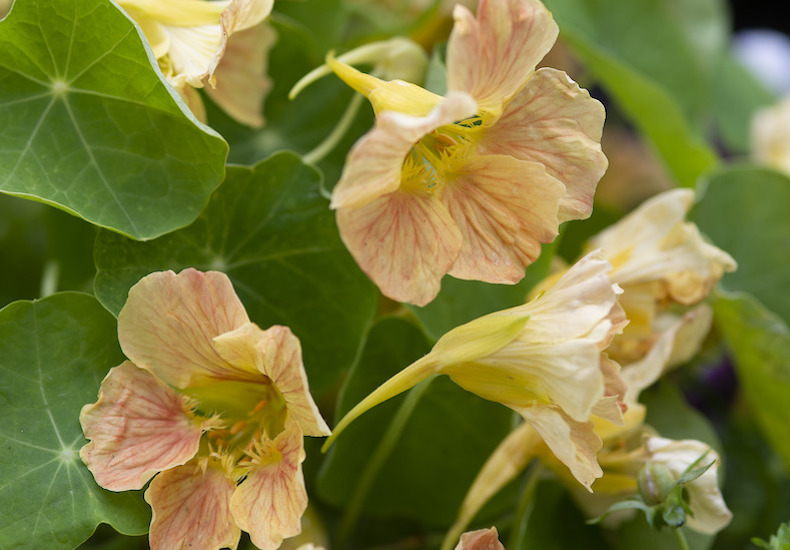
This unusual soft cream bloom is flushed with a hint of pink
Image: Nasturtium ‘Tip Top Pink Blush’ from Suttons
As well as providing a vibrant display, nasturtiums are edible. The leaves make an excellent pesto, the petals add a peppery kick to salads and you can pickle the seed pods to eat as ‘capers’. Here are five of our horticultural team’s favourite varieties…
- Nasturtium ‘Coral Reef’– The coral-red flowers of this compact, mounding variety contrast beautifully with the dark foliage.
- Nasturtium ‘Tip Top Pink Blush’ – Ideal for hanging baskets and tall containers, this short and graceful trailing variety produces rich cream blooms blushed with pink veins.
- Nasturtium ‘Purple Emperor’ – With buds that open in dark burgundy before fading to dusky rose, this trailing variety makes striking ground cover or a dramatic hanging display.
- Nasturtium ‘Orange Troika’ – A classic favourite, these jewel-like orange blooms are beautifully offset by the unusual marbled foliage.
- Nasturtium ‘Baby Yellow’– Tidy, petite and mounding, this heat-tolerant, buttery-coloured variety is perfect for the front of beds, borders and patio containers.
We hope this helps you to grow nasturtiums. For more practical tips, read our expert advice on growing flower seeds and, to add quick and easy colour to your garden, discover the best flower seeds to direct sow.
Lead Image: Nasturtium ‘Bloody Mary’ seeds from Suttons
 Add us to your Google Preferred Sources