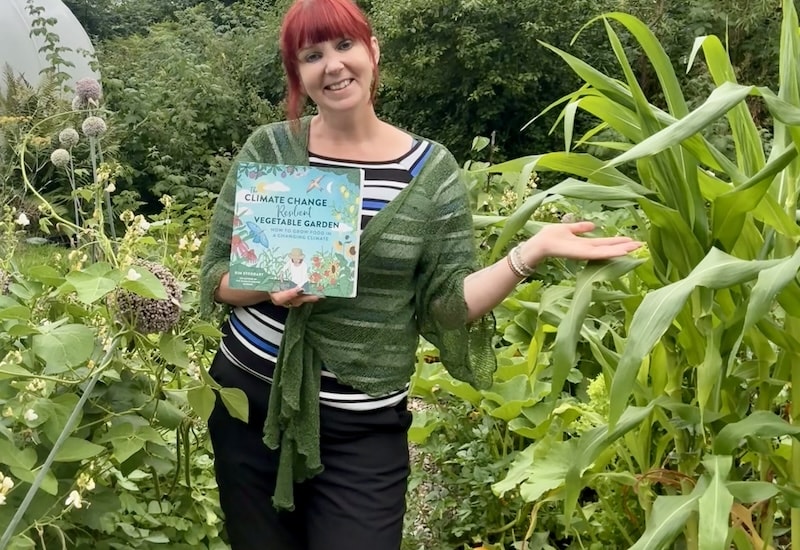
As the UK’s weather gets more extreme, it’s becoming clear that we need to change the way we grow food. Here, multi award-winning journalist and author of The Climate Change Resilient Vegetable Garden, Kim Stoddart explains how to help your garden naturally adapt to more difficult growing conditions…
Browse our full range of organic vegetable seeds for inspiration.
Why we need to change the way we grow food
I’ve been writing about climate change and gardening for publications such as The Guardian for more than a decade. When I first started, the on-the-ground reality of an increasingly warm, more volatile climate seemed far away or unreal for many. That’s certainly no longer the case.
Now every area of the world is subject to extreme weather events, and it’s affecting our ability to garden and grow food as we used to. With these topsy-turvy conditions, it’s no longer gardening as usual… but there are ways to shore up the defences naturally and to build greater resilience on the ground.
If you’re feeling frustrated, scared, angry, downhearted, and a bit helpless, it’s totally understandable. This is why, alongside all the techniques, advice, and innovations outlined in my book, The Climate Change Resilient Vegetable Garden, what I also wish to convey is a strong sense of hope: to let you know that there are solutions, there are opportunities, and there is hope, if we all work together within our communities and with others for the sake of the planet.
Five tips for resilient fruit and veg
Here are just a few changes you can make, in the here and now, to help your garden become more resilient:
1. Make your own mulches
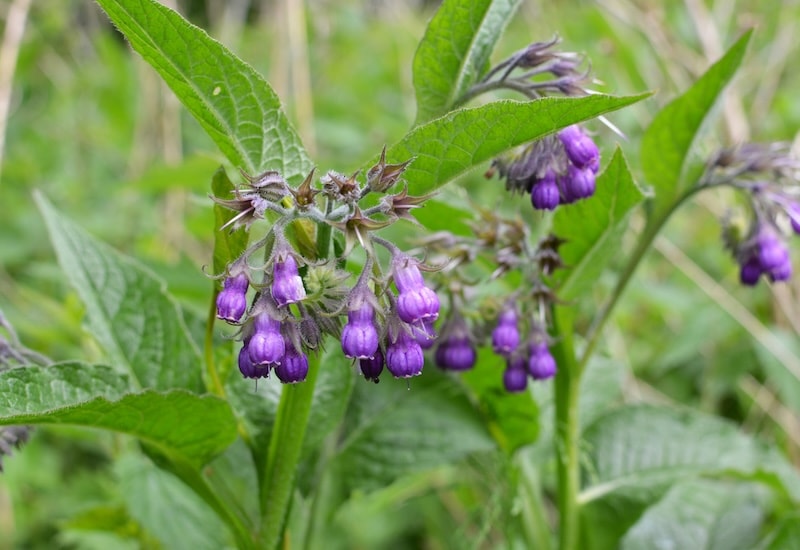
Comfrey is often used to make your own organic fertiliser
Image: Symphytum officinale (Common comfrey) from Suttons
Yes, we’re all bound to buy in some compost occasionally, but when it comes to protecting the soil, there are lots of freely available materials that can be used to help lock water in the ground for longer. This helps massively during a period of heat, and also acts as a good soil improver longer term.
Some of the materials you can use as a thin layer around your plants and produce include:
- Grass clippings (weed seed free)
- Wood chip
- Cardboard
- Leaf mould
- Old compost
- Comfrey
- Chop and drop leaves
It all helps.
2. Consider mixed planting
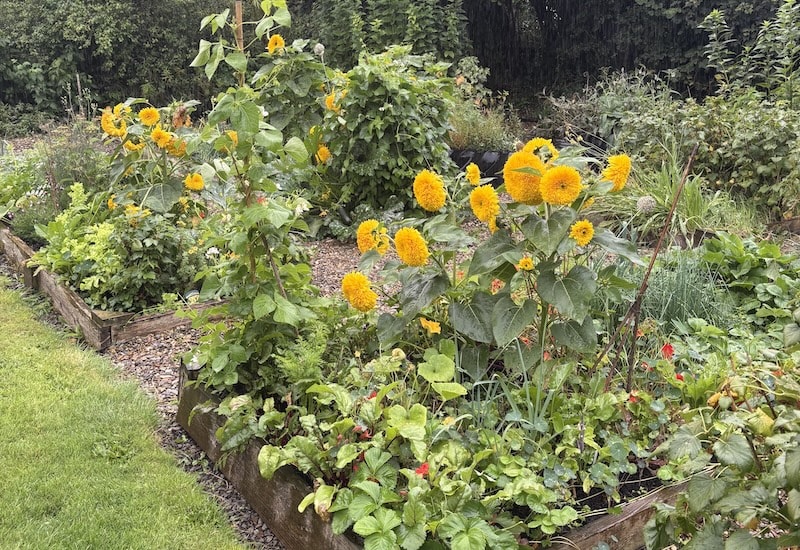
Mixed planting is good for natural pest control
Image courtesy of Kim Stoddart
Rather than block planting and rotating crops in your vegetable garden, consider a more mix and match approach. This is like companion planting but on a much bigger, and more free-spirited scale. It massively helps with natural pest control and also provides protection against the elements as tall plants such as runner beans and sunflowers are mixed in with lettuce, tomatoes and greens. It’s a little like forest gardening with all the different layers and it means that, in extreme heat, the taller plants also provide shade, and the lower growers such as salad leaves and nasturtium protect the ground from drying out so quickly.
This free-planting method also makes it much harder for so-called pests to find what they’re looking for, reduces watering needs and gives food picking a very fun, foraging edge.
3. Build natural resilience
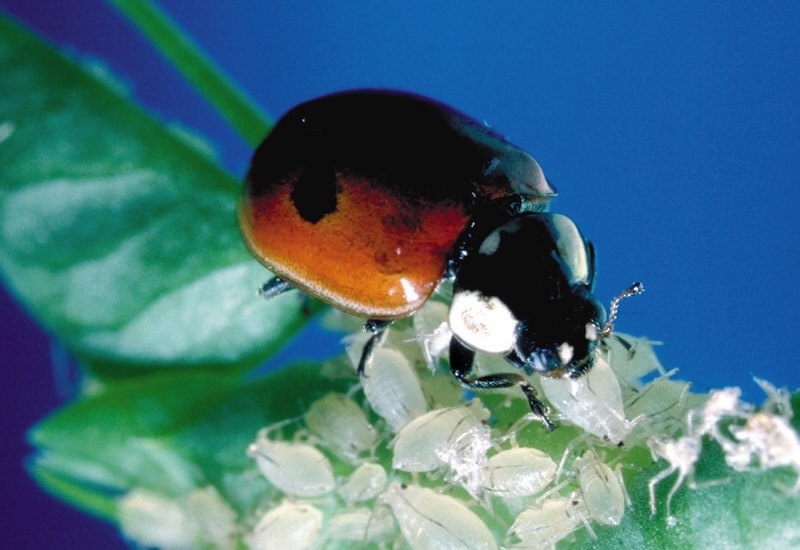
Ladybirds are voracious aphid predators
Image: Ladybirds from Suttons
Working with the natural world helps build resilience in so many free and fantastic ways. It helps nurture a garden that’s truly alive and filled with wildlife and wonder. For example, not digging your soil will improve its structure and ability to cope with greater weather extremes. Also there is an amazing wide web of life beneath the ground that we’re still learning about, like mycorrhizal fungi, which can attach itself to plant roots and help them find food and water from further afield. The more this can be encouraged (and the less disturbed the ground is), the better your plants will be.
Above ground, not pruning and tidying your garden so meticulously can provide many benefits. During extreme heat, slightly overgrown foliage creates some shade for plants growing nearby. Wilder areas can boost biodiversity and provide attractive habitats for many creatures. The more wildlife you have, the more likely there is to be a greater balance of predators which can help keep pest numbers more naturally in check. Plants that are impacted by extremes of weather can be more vulnerable to attack, so the more predators you have in the garden, the better that’ll be.
4. Get water wise
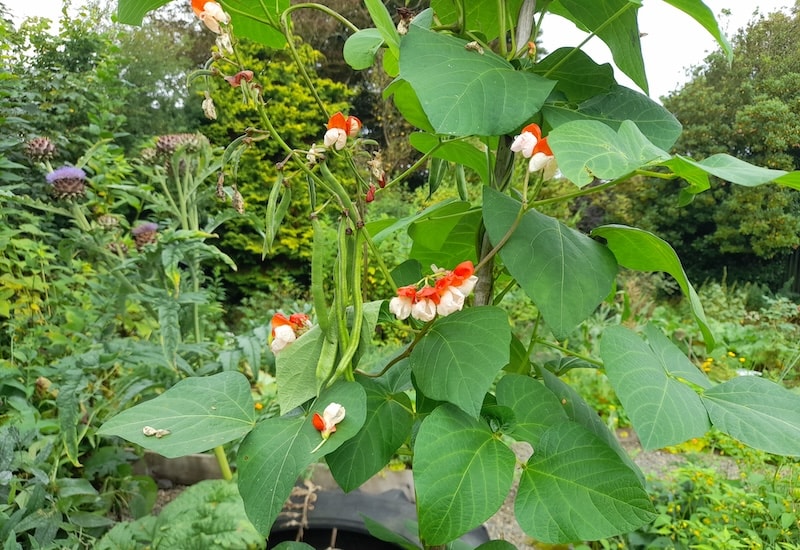
Runner beans growing in a mixed garden
Image courtesy of Kim Stoddart
From watering early in the morning, or later in the day when temperatures are cooler to watering more deeply and less often, there are several ways to make the water you have go further. Of course, during a heatwave plants will need more attention, but plants which are fed and watered a lot are, generally-speaking, a lot needier and less resilient against weather extremes. Pots and containers need more support but, for plants in the ground, not over-pampering helps them to develop deeper root systems and be better able to fend for themselves overall.
Also upscaling your rain water harvesting systems is sensible so you can maximise collection and storage when this vital resource is in ample supply. Water butts come in a range of different shapes and sizes nowadays so there are bound to be some that work around your home and shed to maximise use of space. IBC storage units can also be easily sourced inexpensively second-hand for greater storage opportunities.
5. Shading and layering
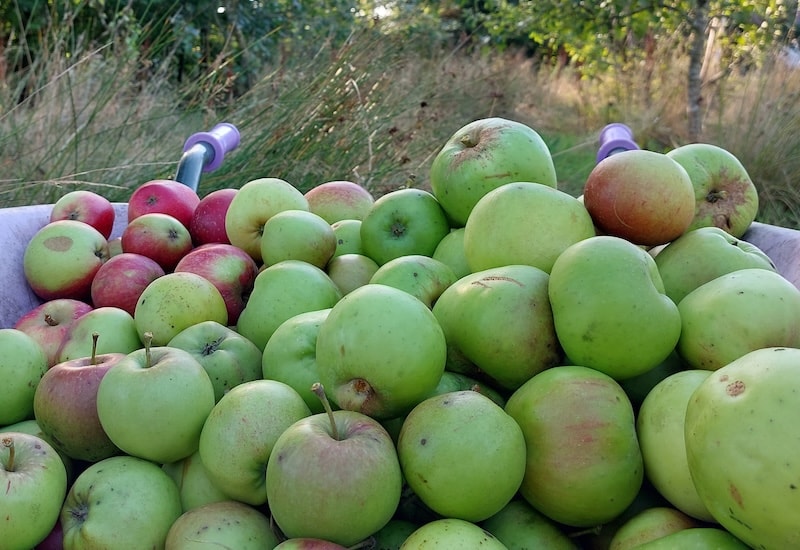
A row of fast-growing damson trees shields Kim’s apples from the elements
Image courtesy of Kim Stoddart
There are lots of ways to shore up the defences with plants. For example, hedging can slow the flow of strong winds, provide shelter for wildlife, and also offer shade for plants growing nearby. I have what’s called a swale (or bioswale) in my gardens as they have flooded previously and this ditch, planted with lots of fruit bushes and willow, acts as the first line of defence at the wetter times of the year. Conversely, the many perennial plants I have growing through my veg patch provide vital shade for crops from the glare of the summer sun.
Further to this, when I first moved to my smallholding in Wales I was told categorically it was impossible to grow fruit trees here because the site was too exposed to the elements. Ignoring this advice entirely, I researched and realised that a row of faster-growing damson trees could provide protection for my apples and pears, and so they did after a few years. My forest garden now features a wide array of trees, all of which are extremely productive. Which just goes to show as is so often the case, if there’s a will, there’s a way.
Want to win a signed copy of Kim’s book and a selection of specially selected Suttons seeds? Enter the Instagram giveaway before 14 August for a chance to win a Climate Change Veg Growing Bundle.
| Kim Stoddart’s book The Climate Change–Resilient Vegetable Garden looks to the past for inspiration for the future. It weaves in lots of savvy solutions, with an emphasis on optimism and easy ways to build resilience naturally, often saving time and money in the process. Visit her website for more information: www.greenrocketcourses.com |
 Add us to your Google Preferred Sources