
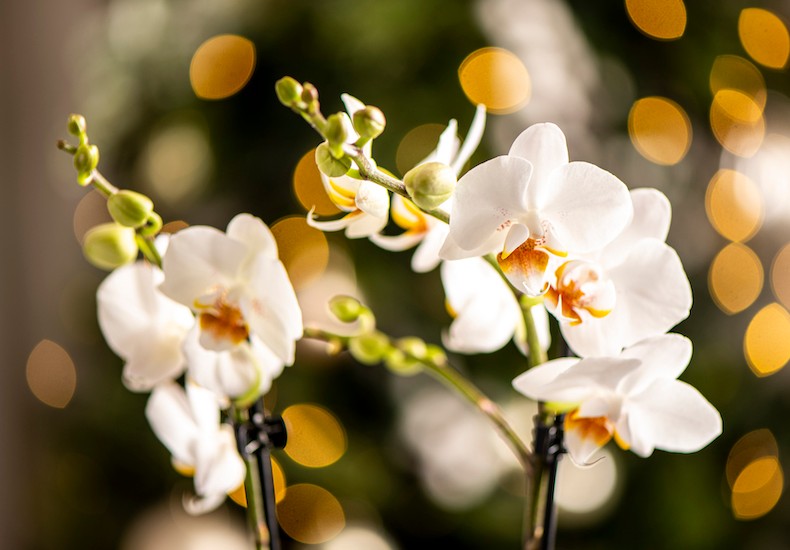
Orchids are one of those houseplants that instantly make your home feel a little more special. Their exotic flowers look amazing, but the good news is they’re not as high-maintenance as many people think. With the right balance of light and humidity, you can keep your orchids happy and encourage them to bloom for many years to come. From choosing the best variety to mastering watering and feeding, here are ten tips to help your orchids thrive.
Browse our full range of house plants for more indoor inspiration.
- Choose the right orchid: The most popular and beginner-friendly variety is Phalaenopsis (Moth Orchid) which can continue to bloom for months at a time. Other options include Dendrobium, Cattleya and Oncidium.
- Position orchids in indirect light: To prevent leaf scorch, most orchids are best positioned in bright, indirect light. In the summer months, try a north or east-facing windowsill in a bright living room.
- Avoid sudden changes of temperature: Most orchids prefer an even temperature between 15°C and 25°C and dislike drafts. But the correct humidity levels are just as important. Aim for 40-70% humidity by misting your plants as necessary.
- Water with care: Water your orchid every 1-2 weeks, allowing them to drain completely after watering. Use tepid boiled water or rainwater if possible.
- Repot orchids every 2 years: Orchids benefit from repotting as soon as their growing medium starts to break down. Choose a slightly larger pot, fill with a specialised orchid mix (eg bark chips) and trim any dead roots.
- Use a specialist orchid feed: Apply a diluted liquid feed designed especially for orchids every 2-4 weeks from March to September. Feed more sparingly through the winter.
- Prune after flowering: When a flower spike has finished flowering, cut it back to just above the lowest flower node to encourage another bloom. After it has reflowered once, cut the stem back to an inch above the base.
- Move to a cooler location after flowering: When your orchid has finished blooming, move it to a slightly cooler spot (about 15°C) to encourage a new flower spike. This can take several months, so be patient.
- Check for pests and diseases: Keep an eye out for mealybugs, scale insects, and spider mites. Healthy plants are better able to withstand attacks from pests.
- Provide extra light in autumn/winter: Find a brighter location for your orchid during the autumn and winter months to compensate for the shorter days.
With a little TLC, your orchids should thrive and bloom for many years to come. Read our article for more advice on caring for house plants and see our horticultural team’s top five house plants to find the perfect variety for every room in your home.
Lead image: Phalaenopsis ‘Twin’ from Suttons (©Branded Garden Products)
 Add us to your Google Preferred Sources